Last updated November 21, 2026
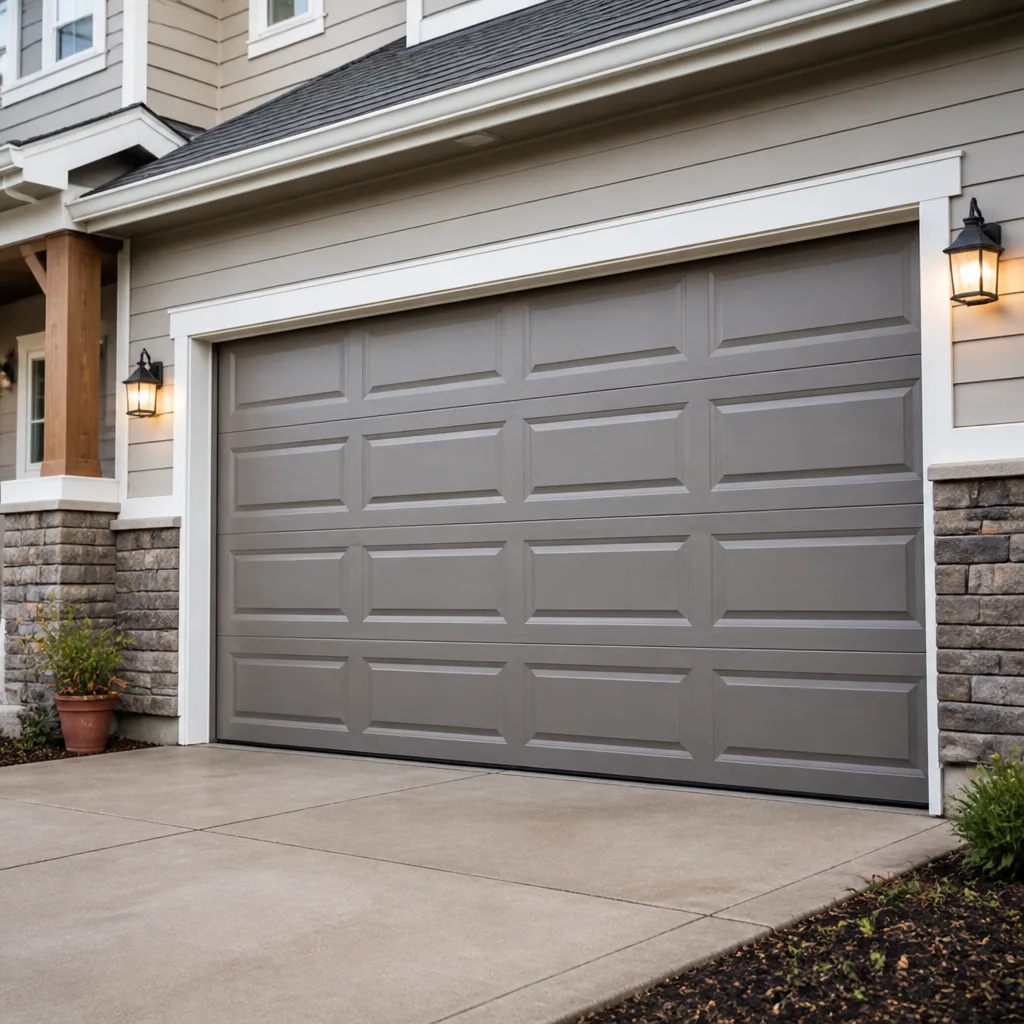 Raised-panel steel
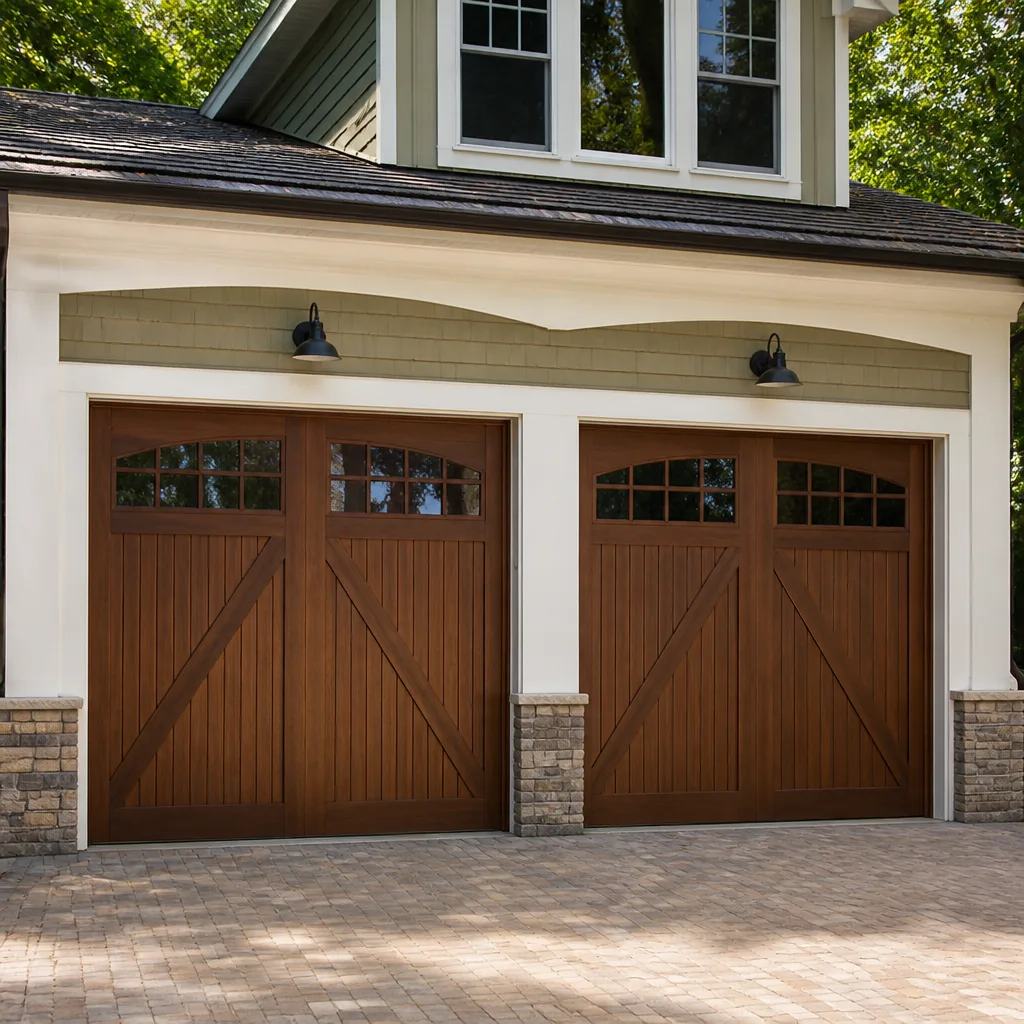 Carriage house
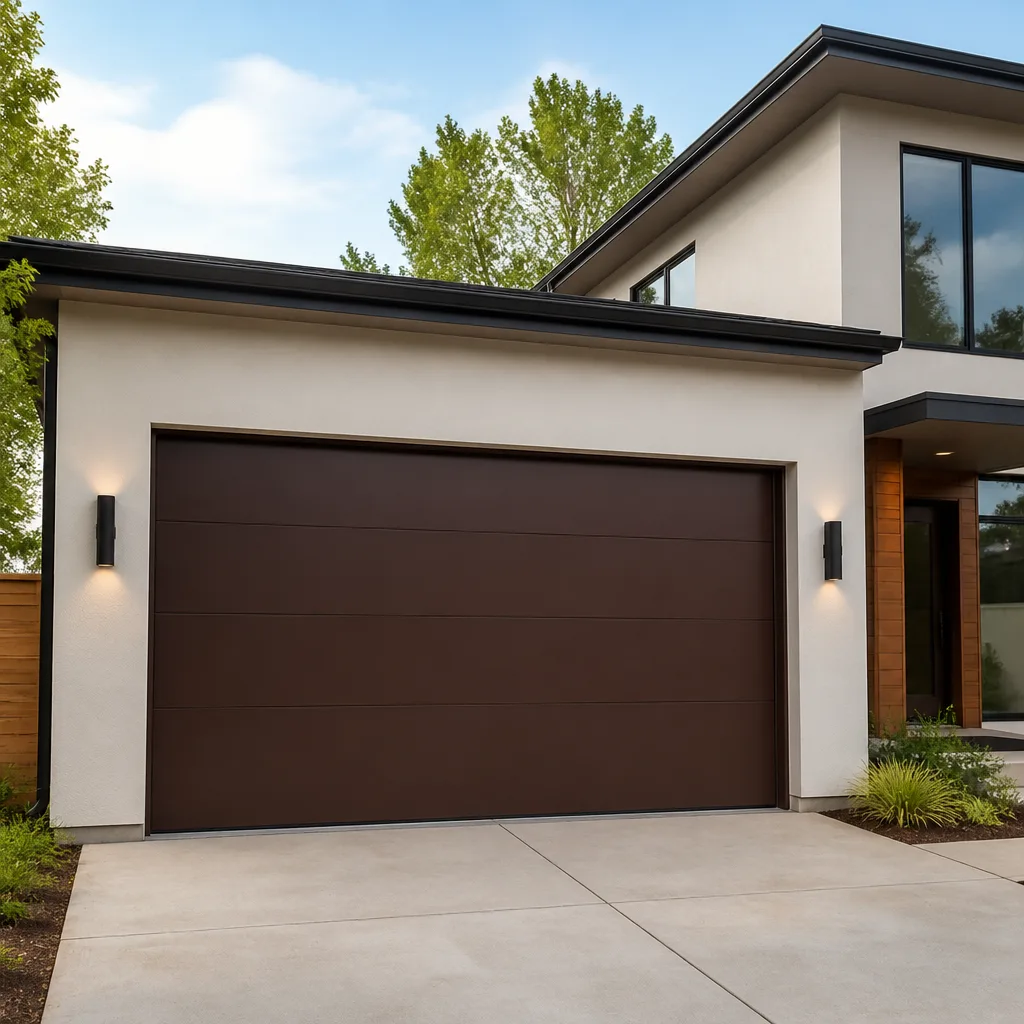 Modern flush
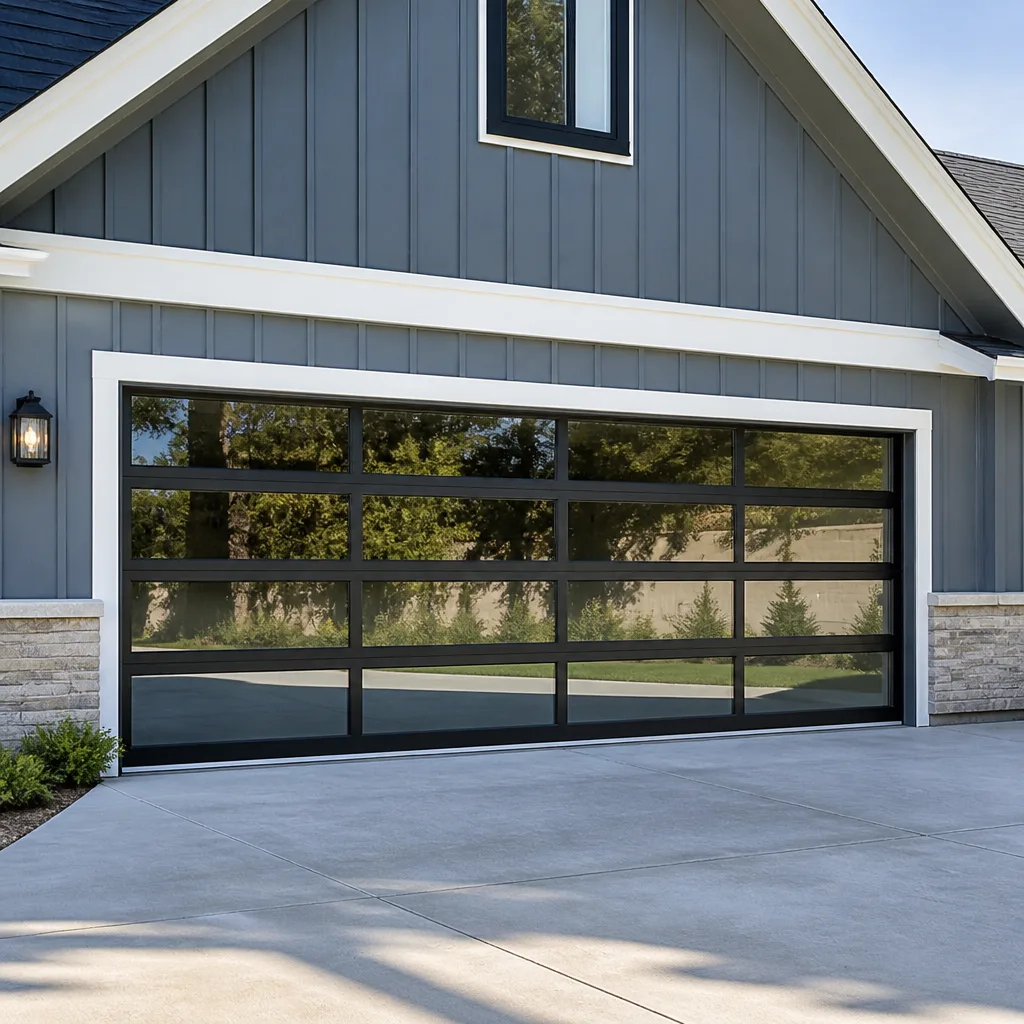 Full-view glass
 LiftMaster openers
 Chamberlain openers
Full 25-point door and opener safety check with every visit - springs, cables, rollers, tracks, and your LiftMaster or Chamberlain opener included
You get a price before we start. It does not change when the pro arrives.
Get your free estimateDIY vs Professional Garage Door: The Fox Chase Homeowner’s Decision Guide
Garage door torsion springs store enough energy to seriously injure someone when they let go, and that fact gets trotted out every time a homeowner asks whether they can fix something themselves. Here’s the problem with that argument: it gets used to scare people away from tasks that have nothing to do with springs. Adjusting a sensor or replacing weatherstripping carries about as much risk as changing a lightbulb. This guide draws the line by task instead of by blanket warning, so you know exactly which jobs are yours and which aren’t. We’ll cover the physics, the mistakes that turn small repairs into big ones, and what to watch for when you hire out work in Fox Chase.
Quick Answer
Cosmetic and low-tension jobs, like weatherstripping, painting panels, sensor alignment and lubrication, are genuinely safe for a careful homeowner. Spring work, cable replacement, track realignment and opener wiring are professional-only tasks, because the stored energy and line voltage involved can cause real injury or wreck the door. Most Fox Chase homeowners can handle the first group and should call a specialist for the second.
Styles & brands we work with
- Raised-panel steel
- Carriage house
- Modern flush
- Full-view glass
- LiftMaster openers
- Chamberlain openers
Table of Contents
- Drawing the Line: A Task-by-Task Breakdown
- The Physics of Torsion Springs, Explained Plainly
- DIY Mistakes That Turn a Small Bill Into a Big One
- When DIY Work Voids a Manufacturer Warranty
- How to Be a Smart Participant in a Professional Repair
- How the Fox Chase Seasons Affect Your Door
- How to Choose a Garage Door Specialist
Drawing the Line: A Task-by-Task Breakdown
The safest way to think about garage door work is to sort every task into one of three buckets: do it yourself, do it yourself with care, and call a professional. That last bucket isn’t about your competence. It’s about the consequences of a mistake being out of proportion to what you’d save.
Here’s how the tasks line up:
- Safe for homeowners: Replacing bottom weatherstripping, painting or staining panels, lubricating rollers, hinges and tracks, clearing debris from the tracks, wiping down photo-eye lenses, and resetting a remote or keypad.
- Safe with some care: Aligning safety sensors (low voltage, no tension), replacing a bent bottom bracket cover, tightening loose hinge bolts, and swapping a lightbulb or battery in the opener.
- Professional only: Torsion and extension spring replacement, cable replacement, track realignment after an impact, drum and bearing plate work, opener wiring to household current, and balancing a door after any component change.
The middle bucket is where capable homeowners earn their keep. If your door reverses for no reason and the photo-eye looks out of line, nudging it back into position is a two-minute job. It’s also the most common reason a door stops closing. Sensor alignment, in particular, is entirely appropriate to handle yourself as long as you’re not standing under a door that’s under tension.
For the third bucket, the calculation changes completely. A cable under load can snap with enough force to break a hand. A torsion spring is a different order of magnitude altogether. Those jobs belong to someone with the right winding bars, the right training, and the right insurance. In Fox Chase, where a lot of homes have attached garages that double as the main entry point, a door stuck halfway is more than an annoyance. It cuts off the path you use every day.
Where this gets practical: if you’re standing in front of your door trying to decide, ask yourself one question. Does the job involve a spring, a cable, or household wiring? If the answer is yes, stop. Everything else, you can reasonably consider.
The Physics of Torsion Springs, Explained Plainly
Understanding why spring work is special starts with what a torsion spring actually does. A torsion spring is a coiled steel bar mounted on a shaft above your door. When the door closes, the spring winds tighter. When you open the door, the spring releases that stored energy and does most of the lifting. That’s why a 200-pound door feels like it weighs ten pounds when the spring is working correctly.
A few things follow from that design:
- The spring is always under load. Whether the door is open or closed, the spring is holding tension. There’s no safe resting position you can put it in.
- Torsion springs are wound to a specific number of turns. That tension is calibrated to the weight and height of your specific door. Guessing wrong doesn’t just make the door heavy. It can overload the spring or the cables.
- When a spring fails, it releases all of that energy at once. The sound alone stops people in their tracks. The stored energy is why winding bars, proper technique and real training matter here.
- Extension springs, used on some older doors, are a separate story. They run along the horizontal tracks and stretch rather than twist. They also fail violently, which is why safety cables are standard on newer setups.
The counterbalance system, meaning springs and cables working together, is what makes everything else on your door function. Every other repair assumes that system is intact. If you replace a roller and the door still binds, the spring or the track is the real culprit, and that’s a professional’s call.
What surprises a lot of Fox Chase homeowners is how quickly springs age. Cycles, not years, are what wear them out. A door that gets opened and closed four times a day by a family with two cars hits thousands of cycles in a few years. We see plenty of homes where the spring gave out on a Wednesday morning with no warning at all. That’s not a defect. That’s the nature of the component.
It’s also why garage door repair focused on springs is a specialty in itself. The work requires specific tools, a specific knowledge of the door’s weight rating, and the judgment to know when the whole assembly should be replaced instead of just the spring.
DIY Mistakes That Turn a Small Bill Into a Big One
Most of the expensive repairs we see started as a small fix that went sideways. Not because the homeowner was careless, but because the mechanical relationship between parts wasn’t obvious. Here are the patterns.
Using the wrong lubricant
WD-40 on a roller or hinge feels like progress. It breaks down the factory grease in sealed bearings and attracts grit. Within a few months the roller is grinding louder than before, and now you need new rollers. White lithium grease or a purpose-made garage door lubricant is what the parts are built for.
Force-adjusting a bent track
A track that got bumped by a car or a bike pries back into shape easily. The problem is that the metal is now fatigued, and the roller rides a different path. The door starts to bind on one side, which stresses the opener’s drive gear. A five-minute straightening turns into a track replacement plus opener work.
Replacing one spring instead of the pair
Matched springs are wound together and wear together. Putting one new spring next to an older one throws the balance off and shortens the life of the new spring. The cost of the second spring at the same visit is small compared with doing the job twice.
Ignoring the balance test
Any time you touch a spring, cable or roller, the door should be balance-tested afterward. That means disconnecting the opener and lifting the door halfway by hand. If it doesn’t stay put, something is off. Skipping this test hides a problem that shows up as opener wear or a door that slams.
Stripping hinge and bracket bolts
The hinges on a garage door are held by bolts threaded into stamped steel. Over-tightening rounds out the hole, and the hinge can’t be tightened again. Once that happens the panel needs repair or replacement, which is a much bigger job than the wobble you were trying to fix.
Painting over the sensors
It’s easy to catch a photo-eye with overspray when you’re painting trim or panels. A clouded lens reads like a misalignment, and the door reverses. Clean the lenses with a soft cloth instead of reaching for a scraper or solvent.
When DIY Work Voids a Manufacturer Warranty
This is where a lot of homeowners get surprised, and it’s worth knowing before you pick up a tool. Manufacturer warranties on garage doors and openers are specific about what voids them, and the rules aren’t uniform across brands.
A few scenarios that commonly affect coverage:
- Opener installation and wiring. LiftMaster and Chamberlain openers are typically specified for professional installation. If you wire one yourself and it fails, the manufacturer may treat the installation as outside their coverage. The same applies to Genie units, where the installation requirements are spelled out in the manual.
- Spring replacement with non-matching parts. Clopay and Amarr doors are built around specific spring configurations. Installing a spring of the wrong wire gauge or length can stress the door’s counterbalance system. If the panels or hinges then fail, the manufacturer may tie it back to the wrong spring.
- Modifying the door structure. Cutting a strut, drilling new holes in a panel, or adding an aftermarket reinforcement bracket to a Wayne Dalton or Clopay door can void the structural warranty. Manufacturers specify which reinforcement parts are approved for which doors.
- Repairs done by someone without the right documentation. Using a licensed, insured professional who keeps a record of the repair makes a warranty claim much simpler. That’s not a marketing point. It’s how the claim process actually works.
The rule of thumb: if a repair touches the counterbalance system or the opener’s electrical connections, keep it professional and keep the paperwork. Cosmetic maintenance like painting, cleaning and weatherstripping doesn’t affect warranty coverage. Neither does replacing a remote battery.
If you’re ever unsure whether a specific repair affects your coverage, check the manual that came with the door or opener. The warranty language is usually straightforward, and it’s specific about what the manufacturer expects. In Fox Chase, where a lot of homes still have the original door paperwork tucked in a drawer somewhere, that check is worth the five minutes.
How to Be a Smart Participant in a Professional Repair
Hiring out a repair doesn’t mean stepping back and hoping for the best. The homeowners who get the best outcomes are the ones who know what to watch and what to ask. Here’s how to do that without hovering.
Before the technician arrives:
- Write down what’s happening. Does the door reverse? Does the opener click without moving? Is there a loud bang or a grinding sound? Specifics shorten the diagnosis.
- Take a photo of the door and the opener from a few steps back, plus a close-up of the label on the opener. That tells the technician the brand and model before they arrive.
- Clear the area. Move the car, clear the floor under the door, and make sure there’s room to work.
- Have the original paperwork ready if you have it. Warranty status matters for parts.
What to watch during the visit:
- The technician should balance-test the door after any spring or cable work. If they don’t, ask them to.
- They should show you the failed part, not just describe it.
- They should agree the price before starting. Any reputable shop will give you a written figure. For spring work, a single spring and a matched pair are priced differently, and that distinction should be clear in the quote.
- Safety reversal should be checked at the end. That means the door should reverse when it meets an object, and the photo-eye should stop it if the beam is broken.
What to ask before they leave: whether the door is properly balanced, whether the opener’s force settings were adjusted, and whether anything else is close to failing. A good technician will tell you about a worn roller or a fraying cable before it becomes a bigger job.
Our technicians have up to 11 years of experience, and they’re trained across the eight major brands: LiftMaster, Chamberlain, Genie, Clopay, Amarr, Wayne Dalton, Craftsman and Raynor. That matters because it means the person at your door knows your system before they walk up the driveway, whether it’s a Wayne Dalton door with a Chamberlain opener or something older. You’ll find more on what opener work looks like in our garage door opener repair guide.
How the Fox Chase Seasons Affect Your Door
Garage doors in this part of Pennsylvania live through a real temperature swing. Summer humidity expands wood and swells seals. Winter cold contracts metal and stiffens grease. Spring and fall bring the freeze-thaw cycles that find every loose fastener.
What that means in practice:
- Weatherstripping takes a beating. The bottom seal is what keeps out drafts, water and small animals. It’s also the cheapest part to replace and completely fair game for a homeowner. Check it twice a year, especially in late fall before the cold settles in.
- Lubrication schedules shift with the seasons. A door that runs smoothly in June may grind by January as the factory grease thickens. A light application of proper lubricant before winter makes a real difference.
- Wood doors need attention. Older Fox Chase homes with wood doors benefit from a fresh coat of stain or paint every few years. Water getting into raw wood is how panels start to warp.
- Metal moves. Steel tracks and panels expand and contract with the temperature, which can loosen bolts over time. A quick check of hinges and brackets each fall catches most of it.
- Ice and snow at the threshold. Keep the bottom seal clear of packed snow and ice. If water freezes in the track, the door can bind on the way up.
None of these involve springs or cables. They’re the maintenance tasks that let a homeowner stay ahead of the bigger repair. A well-kept door in Fox Chase can go years between professional visits; a neglected one tends to fail at the worst possible time.
How to Choose a Garage Door Specialist
When you do need professional work, the choice of who does it matters as much as the repair itself. A specialist who works on garage doors every day has the parts and the judgment. A general handyman may not, and a big-box installer is often tied to a single brand.
What to look for:
- Brand coverage. Ask which brands they work on. If your door is a Clopay and your opener is a LiftMaster, you want a technician who knows both. A specialist trained across multiple brands arrives with parts and knowledge already in hand.
- A named spring repair service. If spring work isn’t listed as its own service, that’s a signal. It’s the most safety-critical component, and it deserves a dedicated capability.
- Emergency availability. A door stuck open or a car trapped inside is a same-day problem. Ask whether emergency service is a standing offering or an afterthought.
- Full lifecycle capability. The same company that repairs your door should be able to install a new one when the time comes. That’s one relationship instead of several. Our garage door installation service covers that end of the work, and you can see the full range on our Garage Door Repair Fox Chase page.
- A written quote before work starts. This is the single most important point. The price should be agreed before anyone picks up a tool, and the final bill should match it.
One more thing worth knowing: ask whether the technician is vetted and insured. The local pro who comes to your home should be licensed and insured as their state requires. That protects you if something goes wrong on the job.
Common Mistakes to Avoid
- Assuming DIY always saves money. A $50 fix that turns into a $400 repair is a net loss. The task-by-task breakdown above exists to help you avoid exactly that trade.
- Forcing a door that won’t move. If the door won’t open by hand, the opener is not going to power through it. Forcing it strips the drive gear. Stop and diagnose.
- Using the opener as a work light. Running the opener repeatedly to check a repair puts cycles on the spring and wears the motor. Use a flashlight.
- Skipping the pre-winter check. Fox Chase winters are hard on weatherstripping and grease. A ten-minute check in late fall prevents most cold-weather failures.
- Ignoring a new sound. A grinding or squealing door is telling you something. Waiting usually means a bigger repair later.
- Painting over moving parts. Paint on tracks, rollers or hinges gums up the mechanism. Mask them off when you paint the door.
- Hiring a generalist for spring work. The most common expensive mistake. A general handyman without spring training may do the job, but the risk and the warranty implications aren’t worth the savings.
See the difference
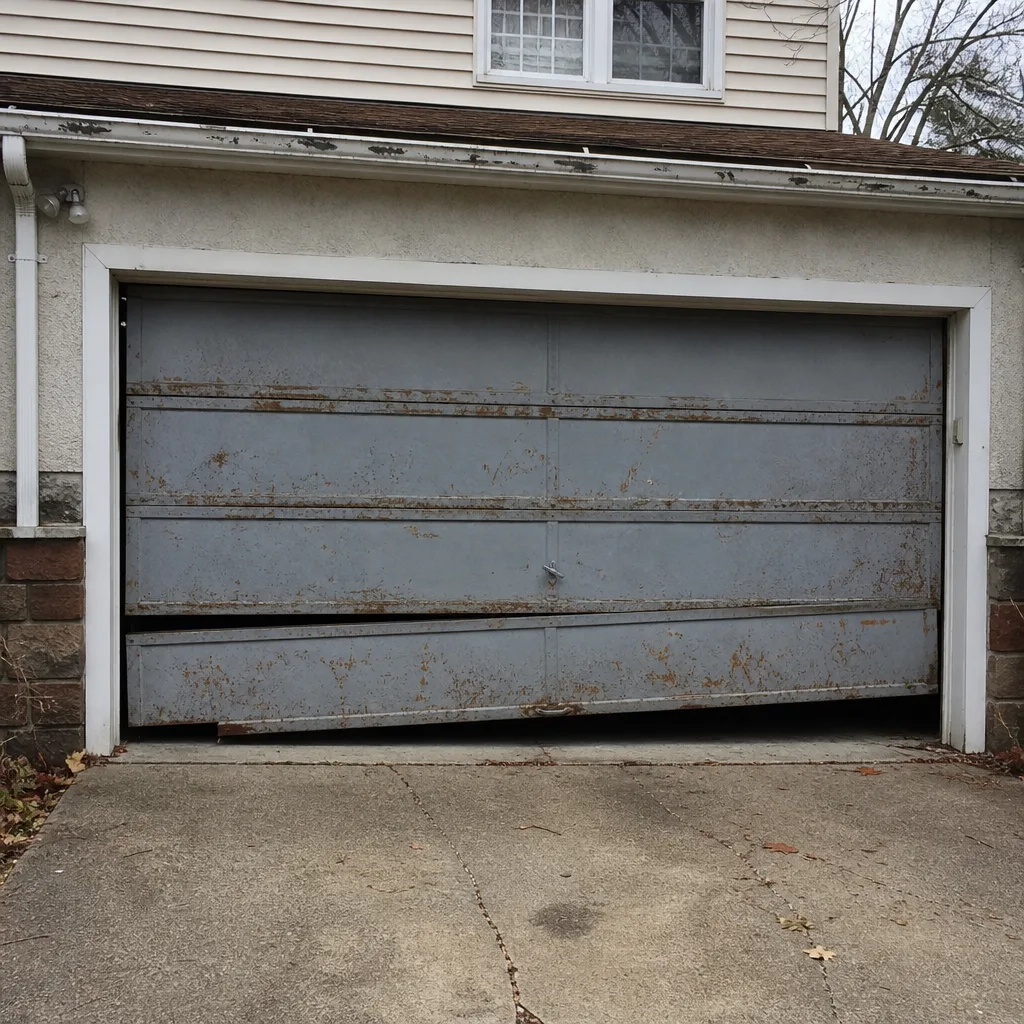 Before
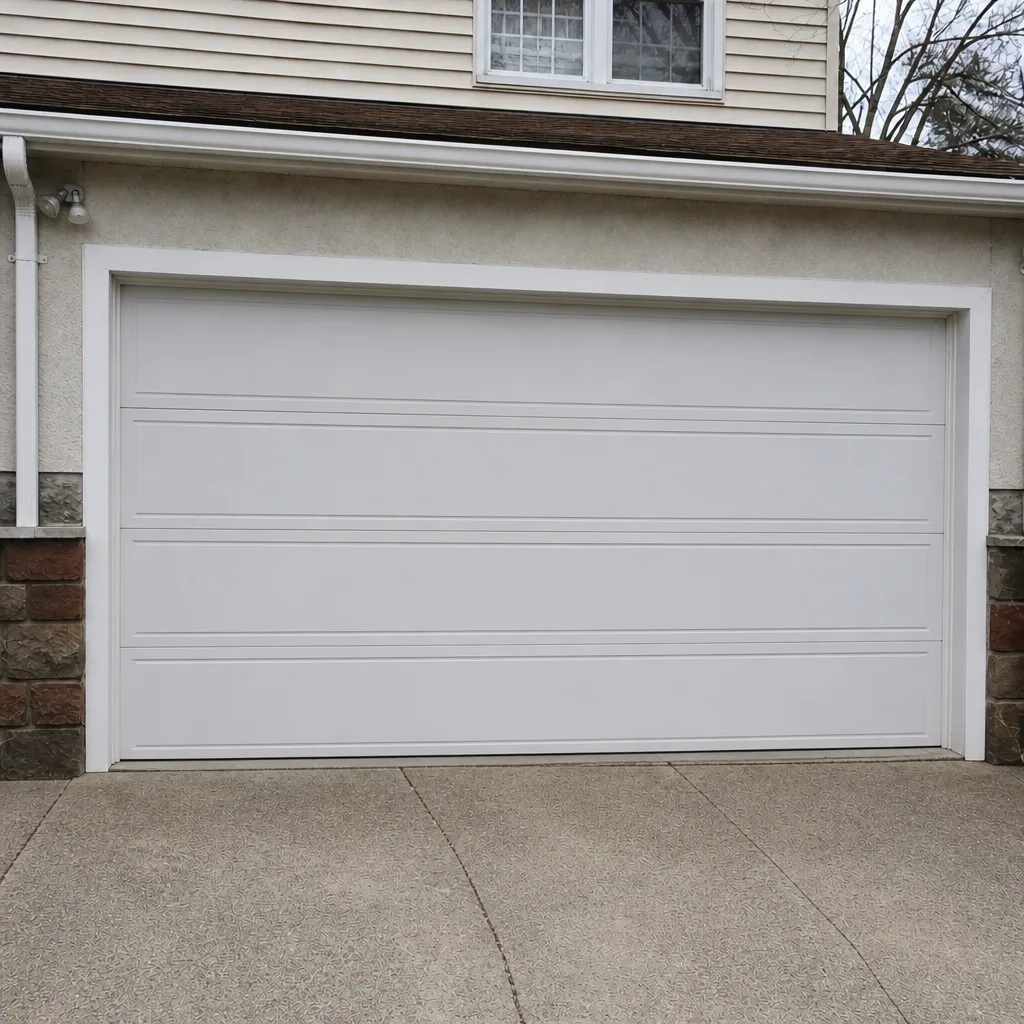 After
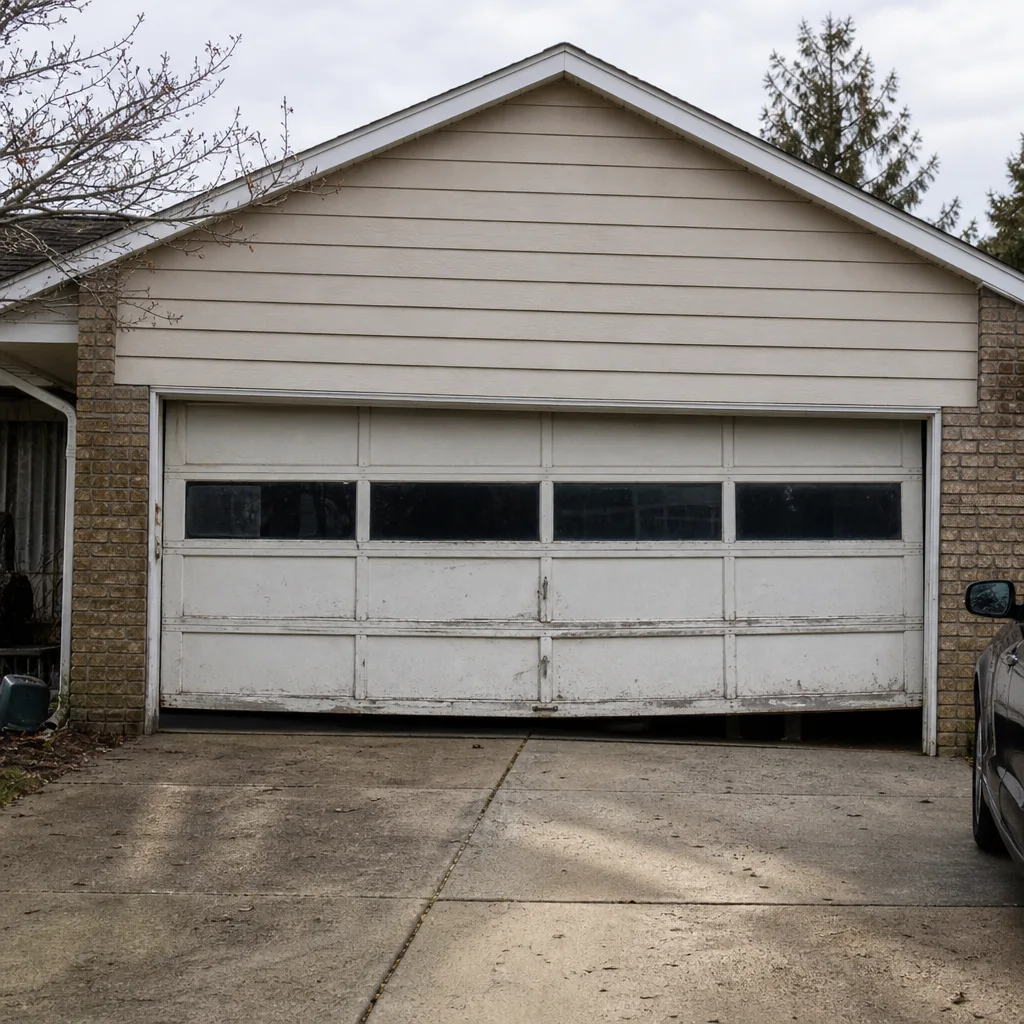 Before
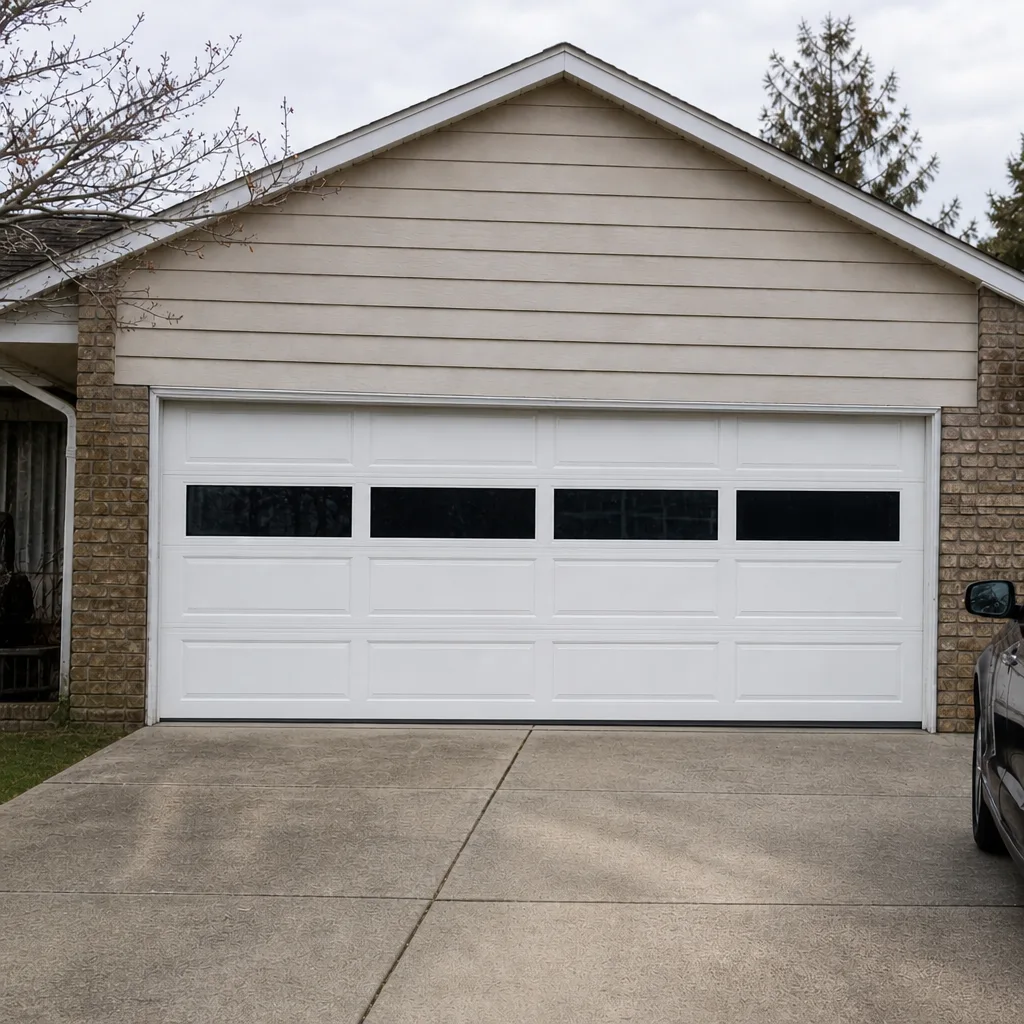 After
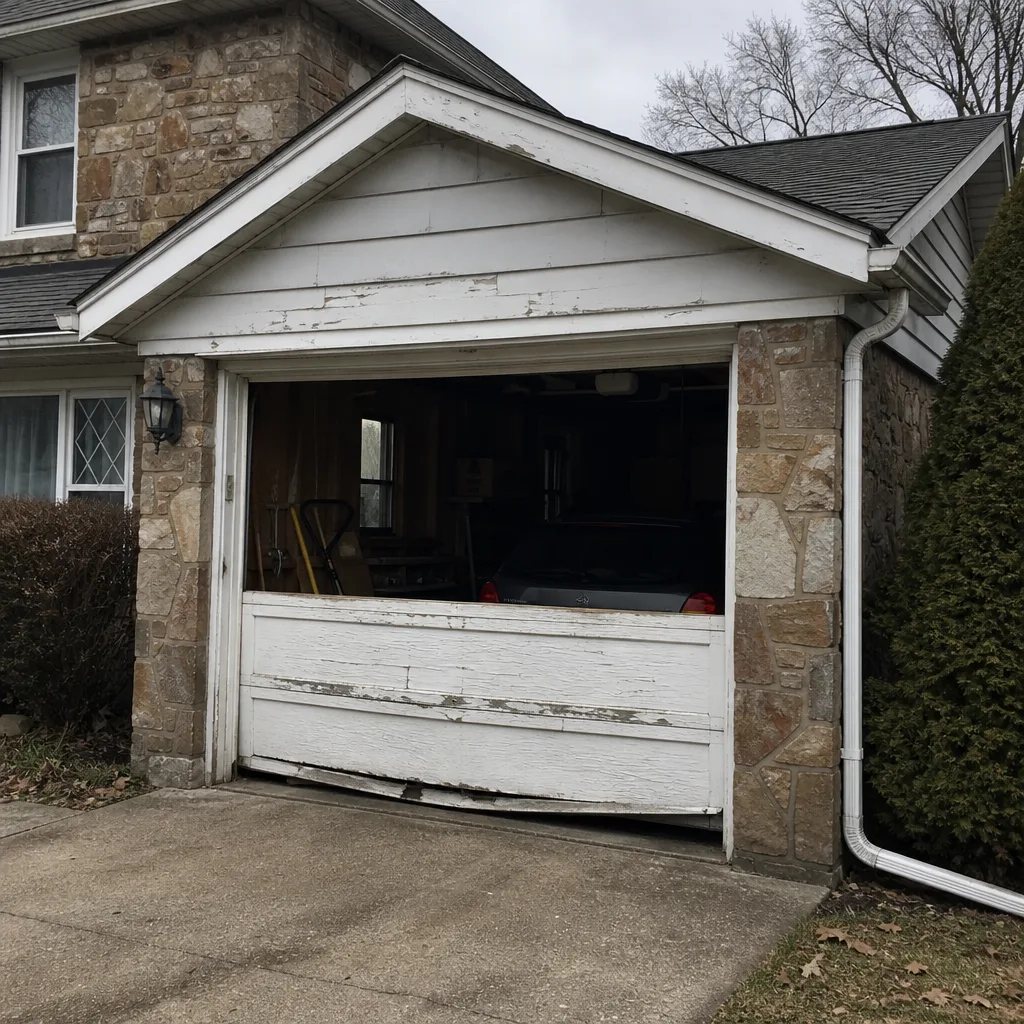 Before
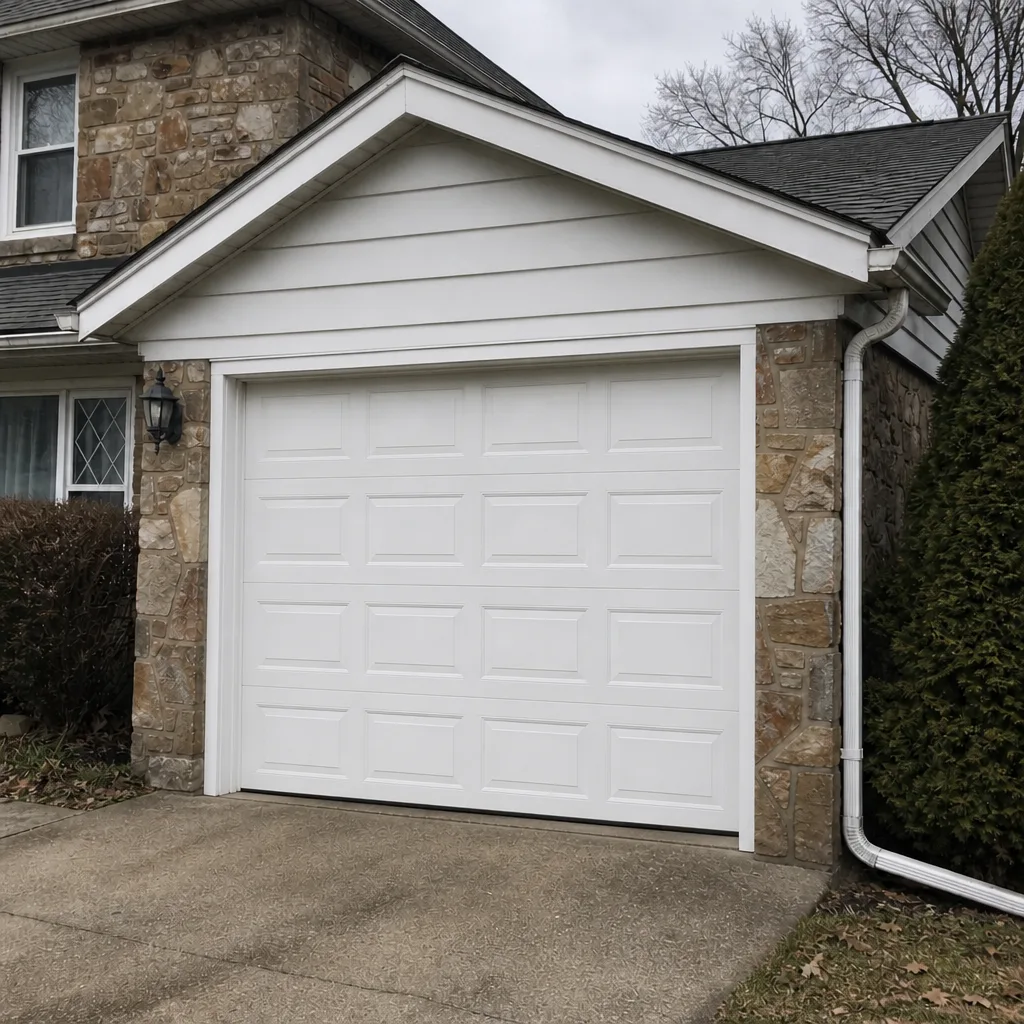 After
When to Call a Professional
Call a professional when the job involves a spring, a cable, a track that’s out of alignment, or opener wiring. Call immediately if the door is stuck open, if a cable has snapped, or if the door is hanging unevenly. Those are the situations where a small delay turns into a bigger problem. For everything else, use the task breakdown in this guide.
Garage Door Repair Fox Chase offers free estimates in Fox Chase. Call (877) 651-7237 and we’ll talk through what’s happening, tell you whether it’s a DIY job or a same-day repair, and give you a price before any work starts.
Frequently Asked Questions
No, and this is the one task in the guide we’d tell you not to attempt under any circumstances. Torsion springs store enough energy to cause serious injury when released, and replacement requires proper winding bars and training. Call (877) 651-7237 and we’ll handle it safely.
Yes, sensor alignment is a safe DIY task. The photo-eye units run on low voltage and hold no stored tension. Nudge them back into line, wipe the lenses, and test the door. If it still reverses, it’s likely a wiring problem and worth a call.
Possibly, depending on the repair. Opener wiring and installation are the areas where manufacturers are strictest. Mucking with the internal wiring on a LiftMaster or Chamberlain unit can cost you coverage. Cosmetic work and battery changes don’t.
Twice a year is a good baseline, once in spring and once in late fall before the cold sets in. Use a purpose-made garage door lubricant on the rollers, hinges and tracks, not a general-purpose spray. Cold weather thickens grease, so the fall application matters most.
Yes, for most repair work. Spring replacement, cable repair, opener issues and doors stuck in position are typically same-day jobs. Emergency service is a standing offering, so if your door is stuck open or blocking a car, call (877) 651-7237 and we’ll respond. A full new-door installation is a scheduled job, not same-day, because the door has to be measured and ordered.
Most repairs fall somewhere between a few hundred and a few hundred dollars depending on the component, and a spring replacement is priced per spring. A matched pair costs about twice a single spring because both are usually replaced together. Call (877) 651-7237 for a free estimate, and the written quote is the price you’ll pay.
The Bottom Line
The DIY-versus-professional question for garage doors isn’t about your skill level. It’s about which tasks carry risk out of proportion to the savings and which don’t. Weatherstripping, sensor alignment, lubrication and painting are yours. Springs, cables, track realignment and opener wiring are not. Know the difference, and you’ll save money where it’s safe and avoid the mistakes that turn a small problem into a big one. If you’re ever unsure which bucket a job falls into, call us at (877) 651-7237 for a free estimate in Fox Chase. We’ll tell you honestly whether it’s a job for you or a job for us.
Written by the team at Garage Door Repair Fox Chase.