Last updated November 21, 2026
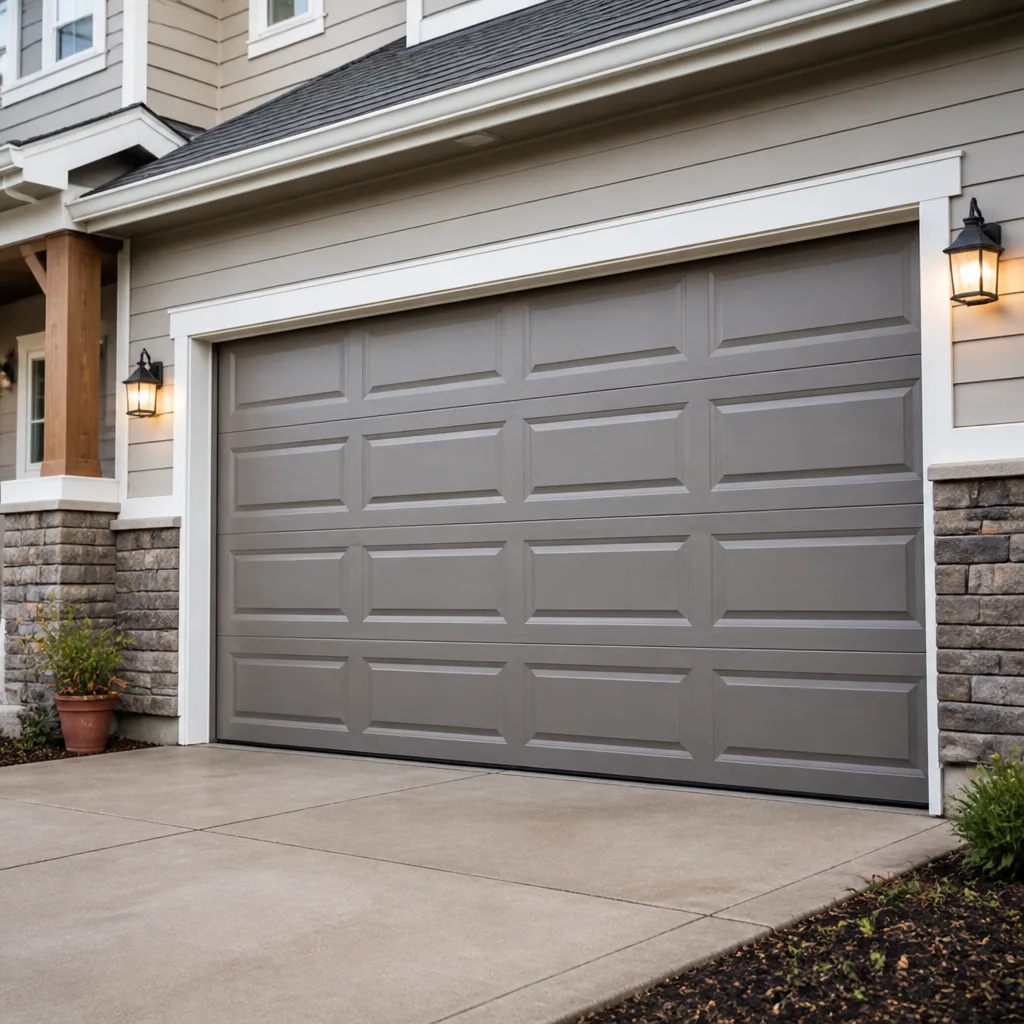 Raised-panel steel
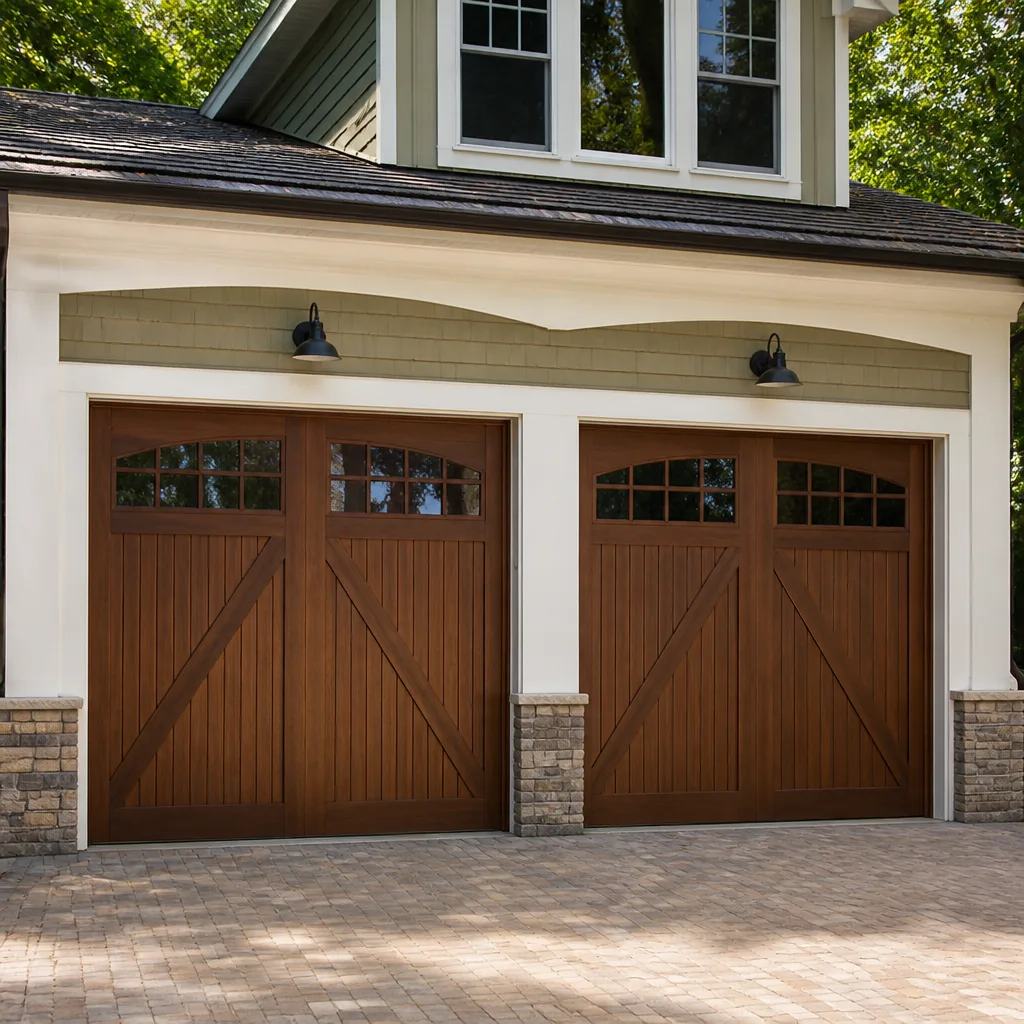 Carriage house
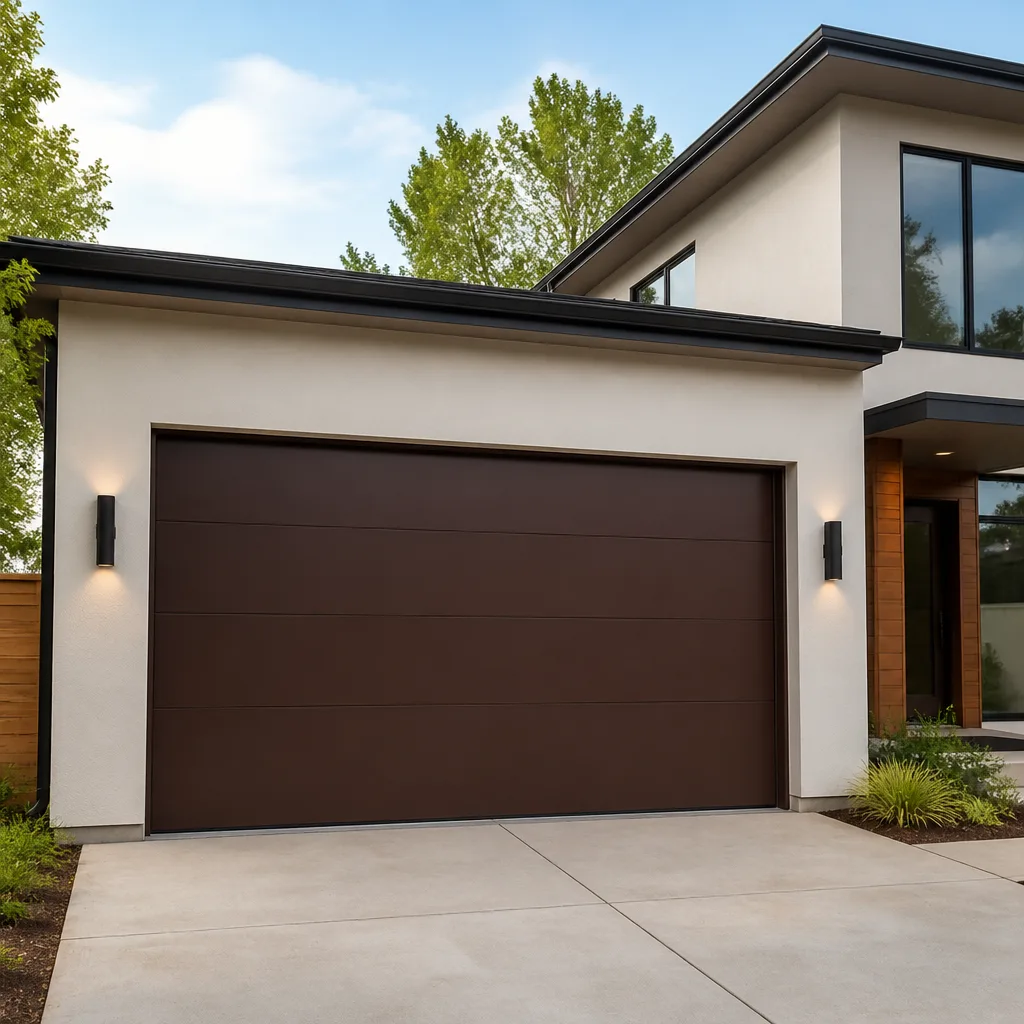 Modern flush
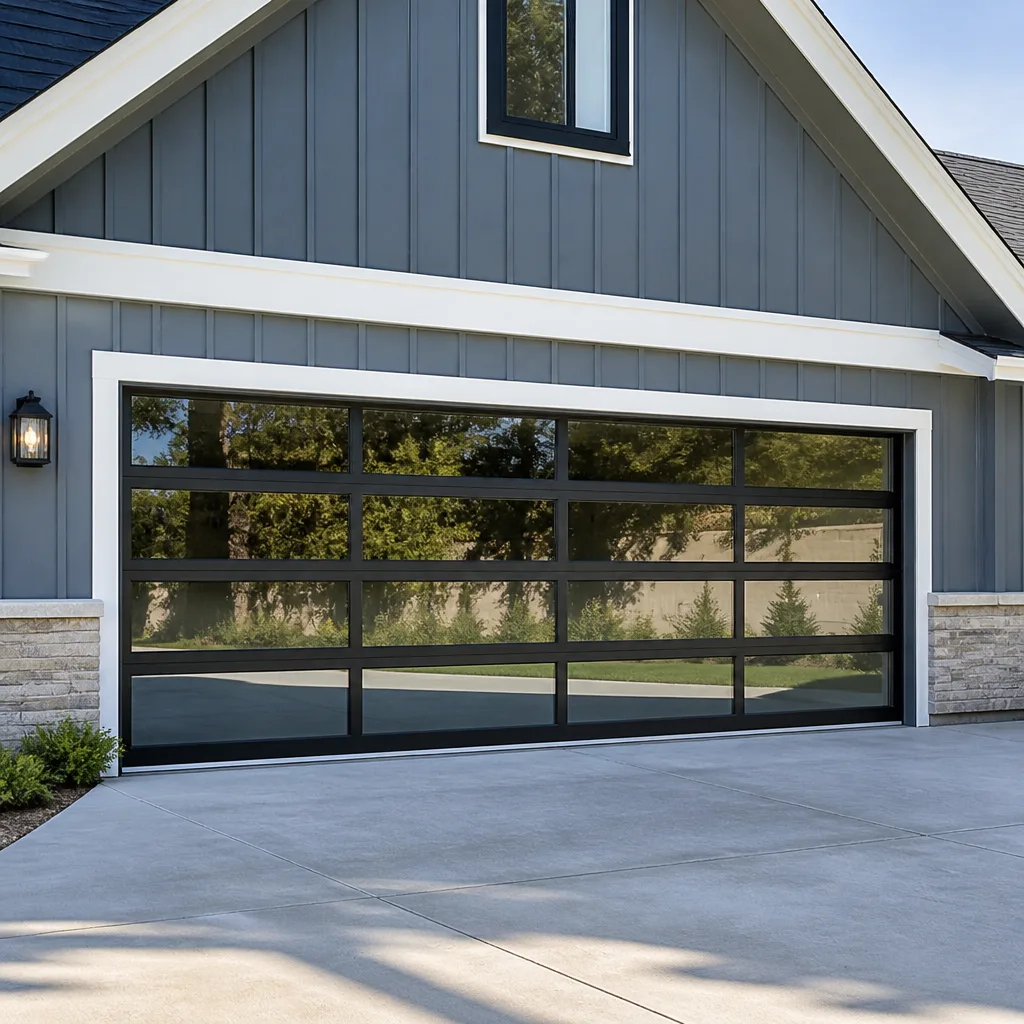 Full-view glass
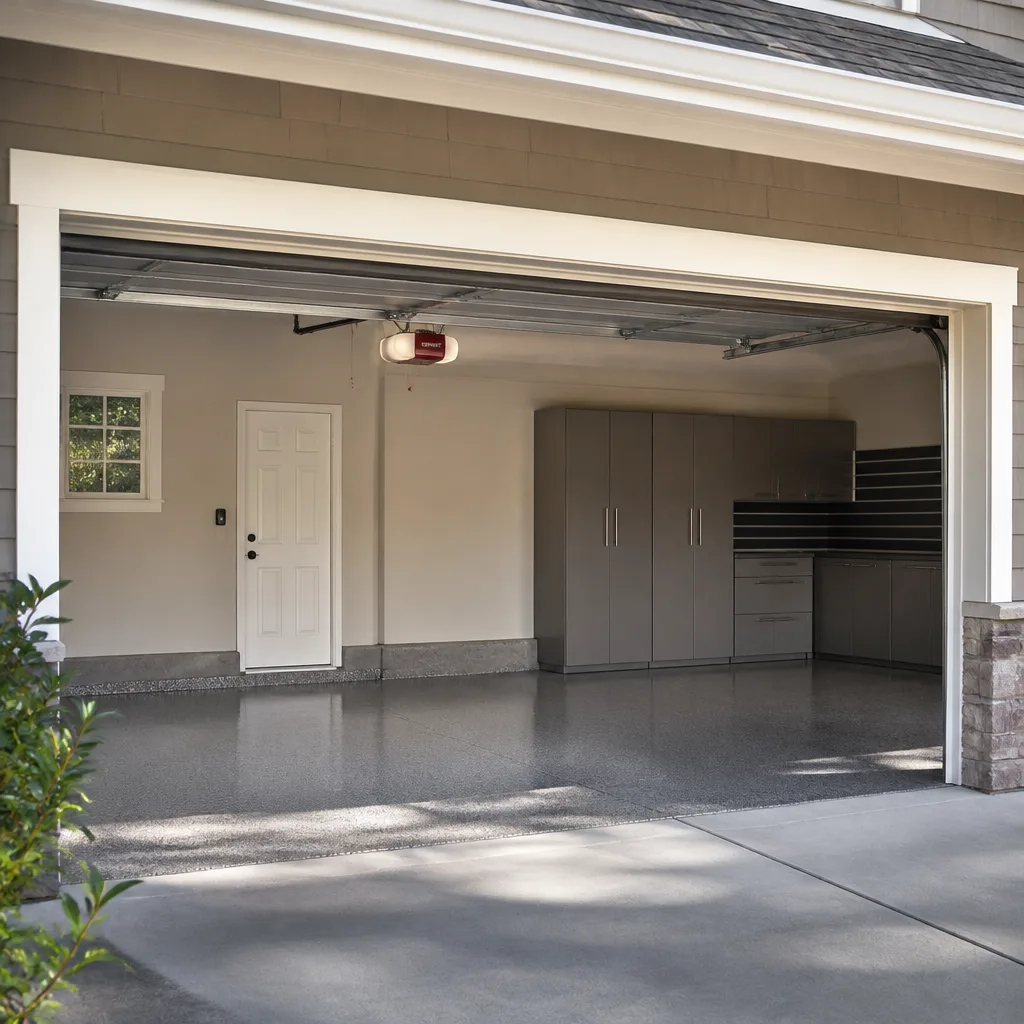 LiftMaster openers
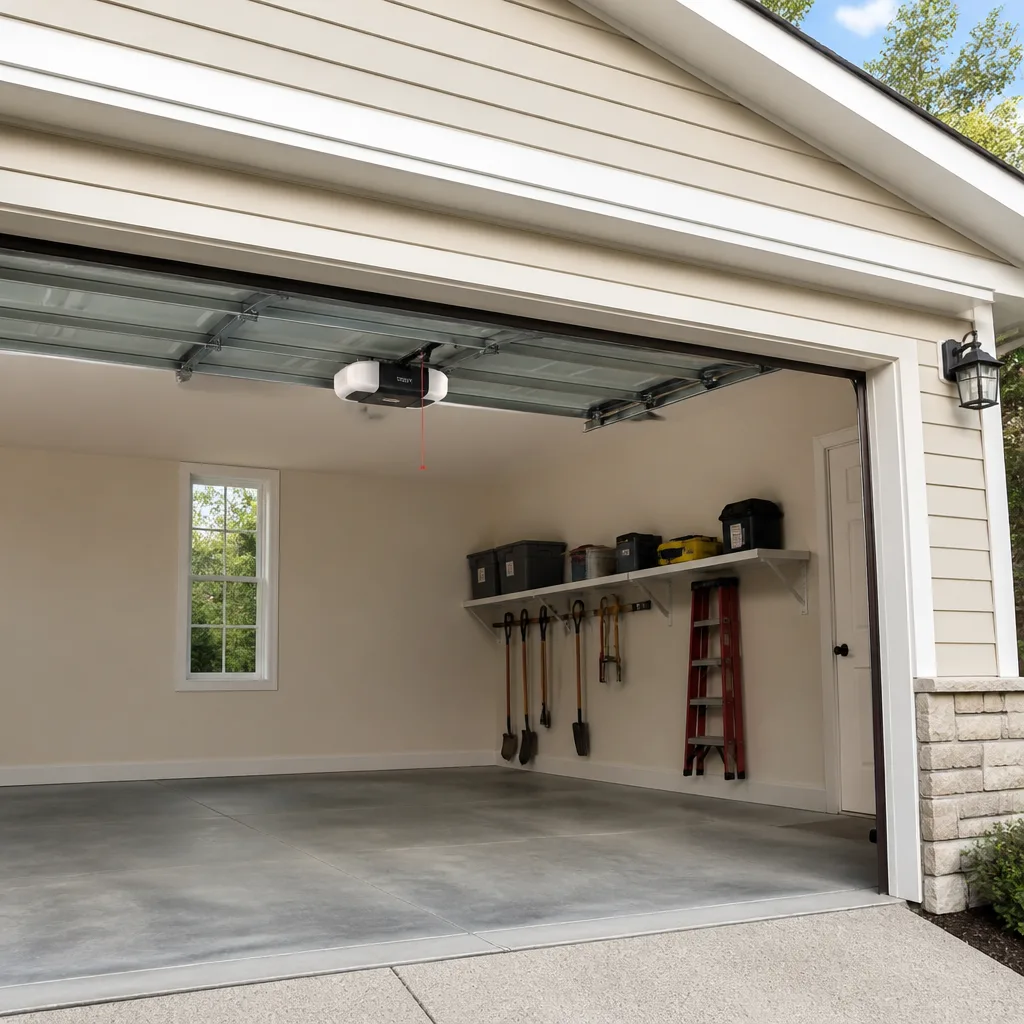 Chamberlain openers
Full 25-point door and opener safety check with every visit - springs, cables, rollers, tracks, and your LiftMaster or Chamberlain opener included
You get a price before we start. It does not change when the pro arrives.
Get your free estimateThe Complete Guide to Garage Doors in Fox Chase
Most garage door advice assumes a garage is a deep, open box with plenty of room overhead. A lot of Fox Chase garages aren’t like that. Plenty of them sit under the house, tucked into a rowhome conversion or a 1940s-era addition, with somewhere around 8 to 10 inches of headroom above the opening. That single measurement changes almost everything: which openers fit, whether a torsion spring can go above the door at all, and whether the kit the big-box store sells will work in your house. This guide walks through every real decision a Fox Chase homeowner faces, from low-headroom setups to narrow alley-access openings, from brand choices to how our garage door repair process actually works. By the end you’ll know what fits your garage, what breaks first, and when a fix makes more sense than a replacement.
Quick Answer
Garage door work in Fox Chase splits into two categories: repairs you can usually get done in a single visit (springs, cables, rollers, opener faults) and installations or full replacements, which need a free measure and a scheduled install. For most older Fox Chase homes, the deciding factor is headroom, door width, and door age. The right choice is never one-size-fits-all – it depends on which era your garage came from. If you want an exact figure, the written estimate sets the price and it’s quoted before any work starts.
Styles & brands we work with
- Raised-panel steel
- Carriage house
- Modern flush
- Full-view glass
- LiftMaster openers
- Chamberlain openers
Table of Contents
- How Fox Chase’s Housing Stock Shapes Your Garage Door Choices
- Low-Headroom and High-Headroom Garages: What Actually Fits
- Door Materials That Hold Up to Philadelphia-Area Winters
- Repair or Replace? A Decision Tree for Fox Chase Doors
- What “Same-Day Service” Really Means for a Garage Door
- Choosing the Right Opener Brand for Your Existing Setup
- Spring Systems and Why They Matter Most
- What a Garage Door Installation Looks Like From Start to Finish
How Fox Chase’s Housing Stock Shapes Your Garage Door Choices
Fox Chase’s garages were not built to one standard. Depending on which block you’re on, you might have a detached cinderblock garage from the postwar era, a rowhome conversion where the garage was carved out of a former basement level, or a newer colonial with a purpose-built attached garage and proper ceiling height. Each of these comes with different constraints. The door that works beautifully in one type can be a bad fit in another.
The 1940s through 1970s stock is where the biggest surprises live. Those garages often have openings that are narrower than the modern standard, sometimes by a few inches, and a lintel height that was set for a lighter door than most today’s insulated models. That rules out a lot of the popular sectional doors right away. The framing behind the opening may also be original wood that has shifted over the decades, which means a standard bolt-on install kit won’t sit flush.
Newer detached garages in Fox Chase, including the infill builds from the last couple of decades, tend to have better headroom and more standardized openings. These give you the widest range of options: full insulation, high-lift tracks, and smart openers all fit comfortably.
The practical takeaway is this: before you pick a door, measure the opening, the headroom above it, and the horizontal depth of the side room. A Fox Chase-specific measure is more useful than any online comparison chart. Our technicians have up to 11 years of experience working in exactly these configurations, and we can tell you in a few minutes which options your garage can actually take.
Low-Headroom and High-Headroom Garages: What Actually Fits
Headroom is the vertical distance from the top of the opening to the lowest obstruction on the ceiling. It’s not the deepest part of the garage. It’s specifically the space directly above the door opening where the track curves back and where the torsion spring or opener rail lives. When that measurement is tight, most standard hardware is out.
Here’s what changes at each range:
- Under 10 inches: Standard torsion and standard 12-inch-radius track won’t work. You’ll need low-headroom track with a smaller radius, and either a low-clearance torsion setup or rear-mounted torsion. Some tight setups also need side-mounted jackshaft openers rather than an overhead rail.
- 10 to 14 inches: Most residential torsion springs fit here, but you may need a smaller drum or compact hardware. Standard radius track is usually possible with the right bracket.
- 15 inches and up: Standard equipment and most smart openers fit. This is the typical spec for a newer colonial-style garage.
The tricky part is that a lot of low-headroom conversions in Fox Chase get retrofitted badly. Someone previously put in standard track that raises the door too high or binds halfway up. That’s a wear-and-tear issue, not a door-quality issue. If your door lurches or catches on the way up, the headroom fit is often the first thing to check.
If you’re not sure where your garage falls, measure three things: the headroom, the horizontal depth on each side, and the width of the opening. Bring those numbers when you call, and we can tell you what category you’re in before anyone arrives. That step saves a lot of back-and-forth, and it’s the reason we ask those questions up front.
Door Materials That Hold Up to Philadelphia-Area Winters
Philadelphia-area winters bring freeze-thaw cycles, wet snow, and road treatment tracked straight into the garage. The door material matters for how the finish holds up over time and how much maintenance you’re signing up for. Our brand-agnostic approach means we can install a Clopay steel door, an Amarr aluminum model, or a Wayne Dalton composite without pushing one over the others. The right material depends on the garage, not the brand catalog.
The three main categories in practice:
- Steel: The most common choice for Fox Chase garages. Steel handles winter well, offers strong insulation with the right core, and holds a paint finish for years with basic upkeep. The main risk is dents from impact, which is a part-replacement job more than a full-door job.
- Wood composite: Composite panels mimic wood grain and resist moisture better than solid wood. They fit the aesthetic of older rowhomes and colonial builds nicely. Composite is more expensive up front and needs periodic cleaning to keep rot out of seams and bottom rails.
- Aluminum: Lightweight and rust-resistant, good for lighter-weight doors and smaller openings where weight becomes a spring consideration. Aluminum panels show dents more readily than steel, so it’s often a better fit for garages where the door is treated gently.
Winter road treatment can leave a crust of salt spray on the bottom rail, and that’s where paint failure starts. Rinsing the door and the bottom seal once or twice during the season helps, and so does a fresh coat on any exposed steel edges. If you see bubbling paint, don’t wait – sand and touch up before it spreads. For a full material comparison or a quote on a new door, see garage door installation.
Repair or Replace? A Decision Tree for Fox Chase Doors
The repair-or-replace call is the one Fox Chase homeowners ask us about most. The honest answer is that most doors can be repaired well into older age. Replacing a door makes sense when the structure and insulation are beyond saving, or when the cost of repairs approaches the cost of a new door of the same class. Run through these questions in order.
- Is the door itself dented, delaminated, or rotting in multiple panels? If yes, the door is a replacement candidate. If a single panel is affected, a panel swap may still be possible.
- Will one spring repair restore operation, or are both springs at end of life? Springs are replaced in matched pairs when both are near failure. A single-spring door is a single repair.
- Is the track bent or out of alignment that a proper adjustment can’t fix? If the track can’t be straightened and re-secured, you’re looking at track replacement – which is a component job, not a full door job.
- Is the door older than the point where insulation and safety compliance match a modern replacement? This is where a new door wins on total cost of ownership, not just up-front cost.
- Does the opener still work but the door won’t move cleanly? That’s a door-and-hardware problem, not an opener problem. Don’t replace the opener until the door itself has been checked.
If you’re still unsure after that, an inspection settles it. Our Garage Door Repair Fox Chase service starts with a diagnostic visit that tells you exactly what’s failing and what it will take. There’s no obligation to move forward if repair is the better route, and we’ll tell you so.
What “Same-Day Service” Really Means for a Garage Door
Same-day service means a technician is on-site the same day you call and can complete the repair during that visit. It doesn’t mean every repair is a one-visit job. It means we can diagnose and get you running again if the parts are available. Here’s how to know which type of job you’re facing, so the visit is efficient.
- One-visit repairs (typical): Broken torsion spring replacement, snapped cable, worn rollers, bent hinge, opener sensor re-alignment, remote and wall-console re-pairing, track adjustment.
- One-visit upgrades (typical): Opener replacement when the existing rail is compatible, opener motor swap on a like-for-like model, reinforcement struts, bottom seal replacement.
- May need a second visit: Non-standard door panel replacement, rare or vintage track hardware, opener models we don’t keep on hand, and full door replacements, which always need a measure and a scheduled install.
The reason is mechanical: a standard 7-foot-high door with standard track uses the most common spring, cable, and hinge sizes, so we can carry them without planning each one. A low-headroom Fox Chase rowhome conversion with non-standard track radius needs a specific part, and that part is often ordered the same day. We’ll tell you on the phone which category you likely fall into, so you’re not surprised.
Emergency service is a standing part of what we do, not an afterthought. A door stuck open overnight, a broken spring blocking the car, or a door stuck halfway up is the kind of call we’re set up to respond to. Call and we’ll get a technician out. If it’s a repair we can finish in the visit, we will, and if the part needs ordering, we’ll tell you the moment we know.
Choosing the Right Opener Brand for Your Existing Setup
Most opener problems in Fox Chase homes don’t require a new opener. They require a compatible part for the one that’s already there. That’s why we work across all the major brands – Genie, LiftMaster, Chamberlain, and Craftsman among them – rather than steering you toward one brand. Our technicians have the parts depth to fix what’s already installed.
A few specifics that matter for older Fox Chase homes:
- Chain-drive units: Common on older installations, durable and simple. Noisy, but usually repairable rather than replaceable. A worn chain, a failing gear, or a bad sprocket can be fixed without pulling the whole unit.
- Belt-drive units: Quieter and better for attached garages where the door is under living space. When these fail, it’s usually the belt itself or the motor capacitor, both of which are repairable.
- Screw-drive units: Less common but reliable. Failure is typically a worn carriage or a stripped traveler, both replaceable without a new motor.
- Smart WiFi-connected openers: LiftMaster MyQ, Chamberlain MyQ, and Genie Aladdin Connect are the main smart platforms in Fox Chase homes. When these fail, the issue is usually the wall console, the Wi-Fi module, or the sensor – all of which are serviceable.
A note on smart openers and older homes: the WiFi module still needs a strong signal, and a detached cinderblock garage can block it. If your app keeps dropping the door, the fix might be a range extender rather than a new opener. We check this first before recommending a replacement.
When a replacement is the right call, we can install any of the major brands. See garage door opener repair for the diagnostic and repair process, and call us for a quote on a new opener before assuming yours is finished.
Spring Systems and Why They Matter Most
Springs carry the full weight of the door. They’re the single most dangerous component to touch, and the area where general handyman services most often stop. We treat spring repair as its own specialty because it needs to be treated that way. Our technicians have up to 11 years of experience on spring and hardware work, and that’s why we don’t hand this job to a generalist.
Two spring types matter in Fox Chase:
- Torsion springs: Mounted horizontally above the door on a shaft. Standard for most attached garages and newer builds. These come in matched pairs and are sized to the door weight and headroom.
- Extension springs: Mounted along the side tracks. Used on some older and lighter doors. These carry specific safety-cable requirements so a snapped spring can’t fly loose.
The headroom constraint on rowhome conversions in Fox Chase sometimes rules out a standard torsion setup, which is why a low-clearance torsion configuration or a rear-mounted torsion system is the right call on those doors. If someone previously installed a standard spring kit in a low-headroom garage, the spring won’t last, and the door can bind or jump. That’s a common issue in Fox Chase conversions, and it’s fixable once the right hardware is set.
A safety note: springs are under extreme tension, and a spring that slips during adjustment can cause serious injury. Do not attempt to unwind, adjust, or replace a torsion spring or a safety cable yourself. This is one area where a trained technician makes a real difference. Our team handles spring work with the proper winding bars and calibrated sizing, so the repair is done once and safely.
If you suspect a spring problem – the door is too heavy to lift, or it drops hard on the way down – call before you operate it again. We can assess it on a same-day visit and get you running.
What a Garage Door Installation Looks Like From Start to Finish
Installation is a scheduled job, not a same-day fix, because it requires a measure, a door order, and a careful set. Our process in Fox Chase has a few steps you should know about so you can plan.
- Free measure and inspection. We measure the opening, headroom, horizontal depth, and framing. We note any structural issues (rotted framing, misaligned tracks, out-of-square openings) that need addressing before the new door goes up.
- Product selection. Based on the measurements and your home’s era, we narrow the field to door types that fit your specific garage. You’ll see options across brands, including Clopay and Amarr.
- Written estimate. You get the price in writing before anything is ordered. The price is locked in at the time of the estimate; the written estimate sets the final price.
- Scheduling and prep. We schedule the install day and prep your existing frame, tracks, and hardware.
- Install and test. We remove the old door, set the new tracks and hardware, mount the door, balance the springs, and test the full open-and-close cycle.
- Safety check and hand-off. We verify the safety reverse system and confirm the opener limits are set. You’ll get a walk-through of the new door before we leave.
On a Fox Chase rowhome conversion, step one is where most surprises turn up. Narrower openings, low headroom, and non-standard framing all get solved here. A quality installation takes the quirks into account, which is why we insist on a measure before a written price. We don’t quote an install off a photo or a phone call – it’s not accurate enough.
Common Mistakes to Avoid
- Buying a standard opener for a low-headroom garage. The most-advertised openers need more overhead clearance than many Fox Chase rowhome conversions have. The opener ends up scraping or defeating the whole system. Get the headroom measured before you buy.
- Ordering a door before the opening is measured. A few inches narrower or shorter than standard is common in older Fox Chase homes. Order first and you’re stuck with a door that doesn’t fit, or a return process that takes weeks.
- Replacing one spring when both are at end of life. When springs are replaced in a matched pair, the second spring usually fails within months of the first. Replacing one and then paying for another visit costs more overall.
- Calling a general handyman for spring work. Spring work is the highest-risk part of the job. A generalist without the right tools and training can put you and them at risk. Use a technician trained specifically for garage door hardware.
- Ignoring the bottom seal through winter. Road treatment and snowmelt collect there, and a failing seal lets moisture into the door panel and framing. A cheap seal replacement prevents a much more expensive panel or frame issue.
- Assuming a noisy opener needs to be replaced. A chain-drive opener is naturally louder than a belt-drive; noise alone isn’t a failure. Have it checked before you spend on a replacement.
- Putting off a door that sticks halfway up. Sticking is usually a track, spring, or headroom-fit problem. Left alone, it puts wear on the opener motor and can cause the door to come off track.
See the difference
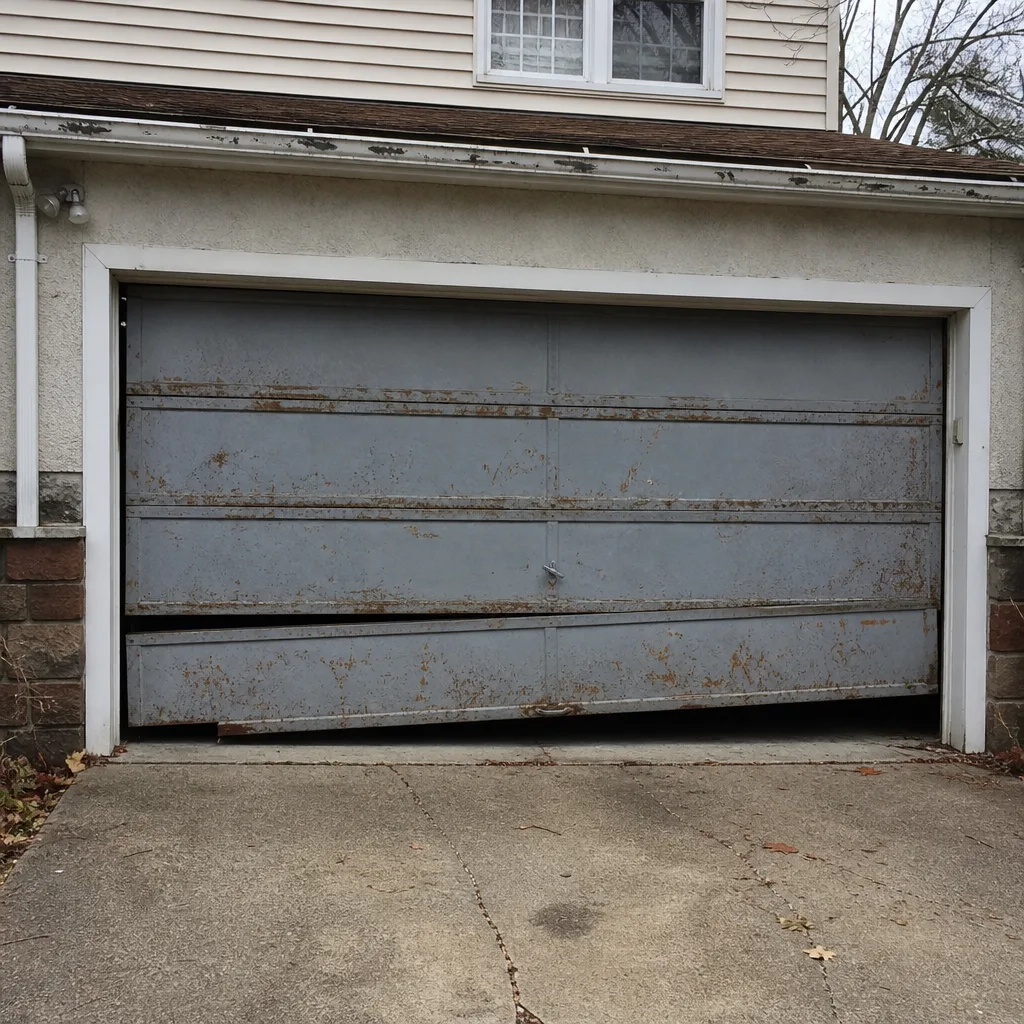 Before
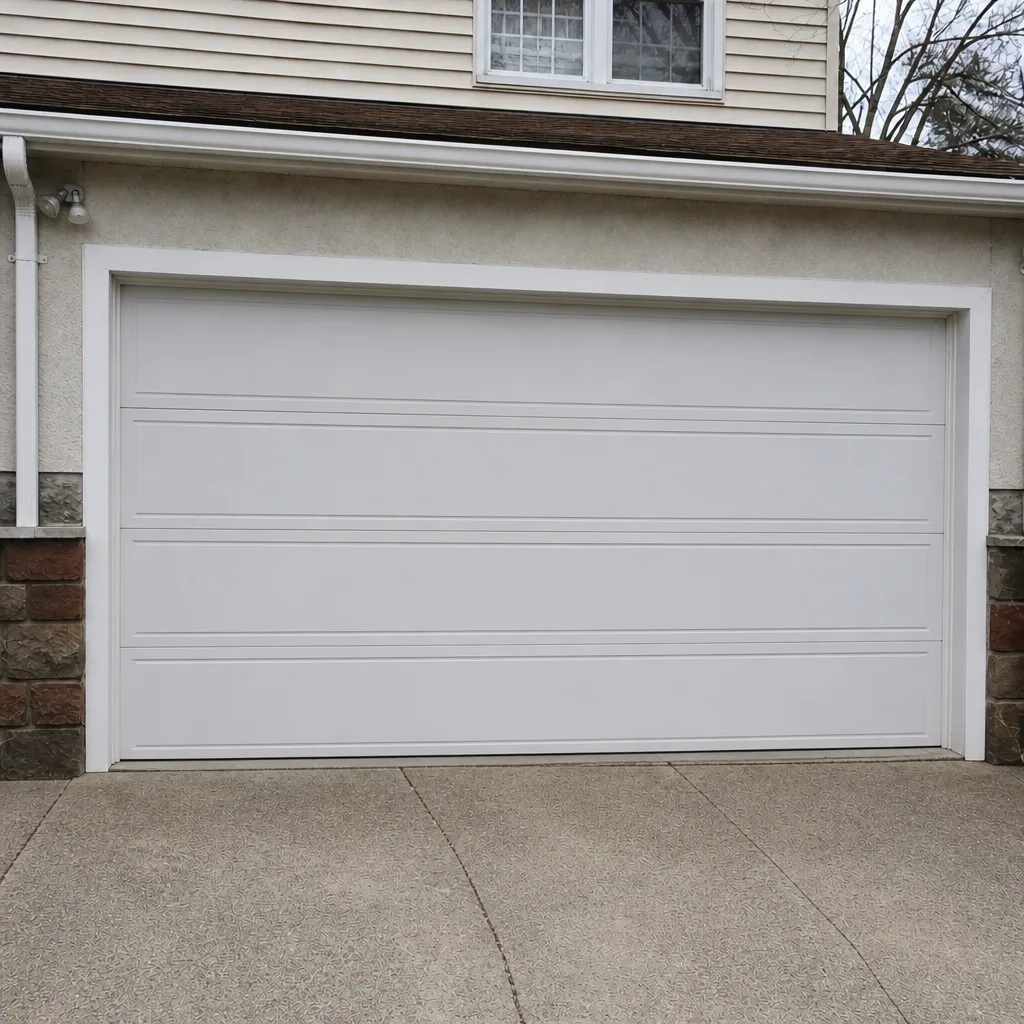 After
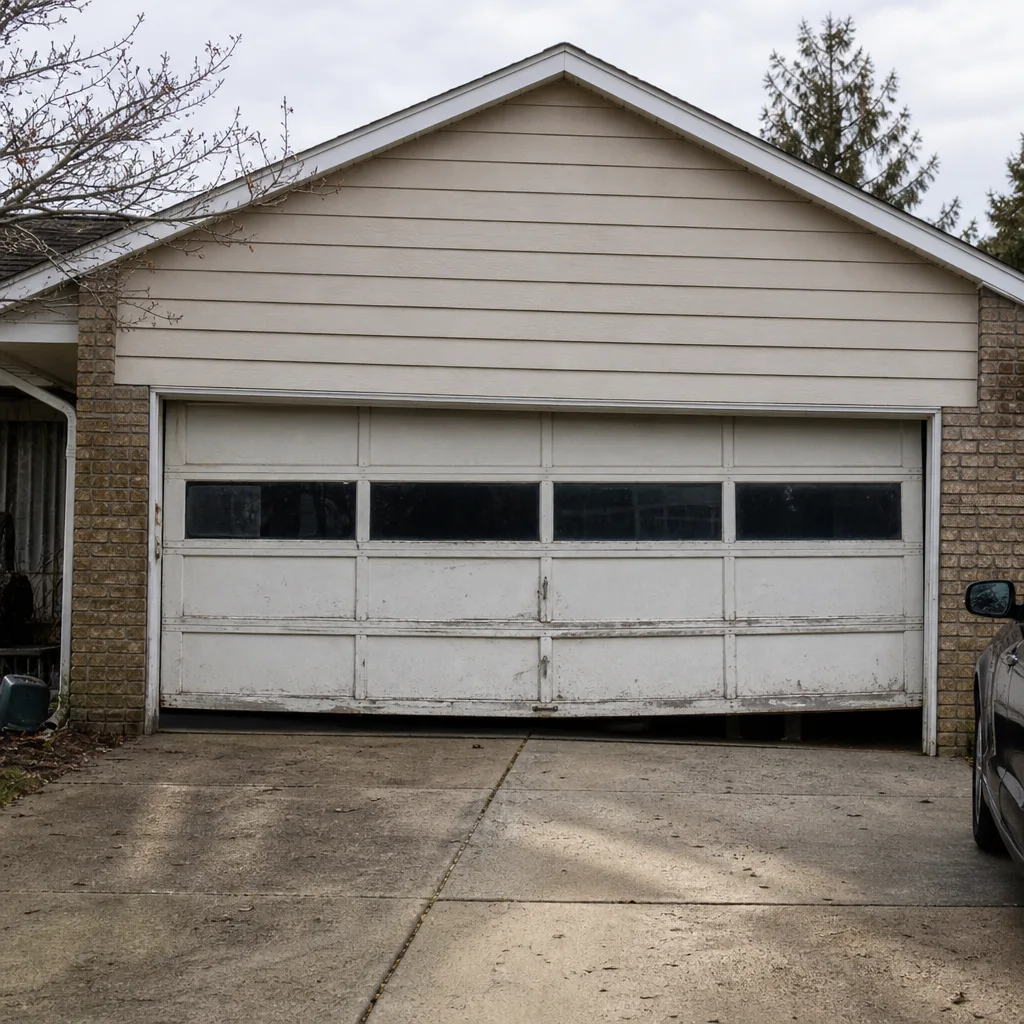 Before
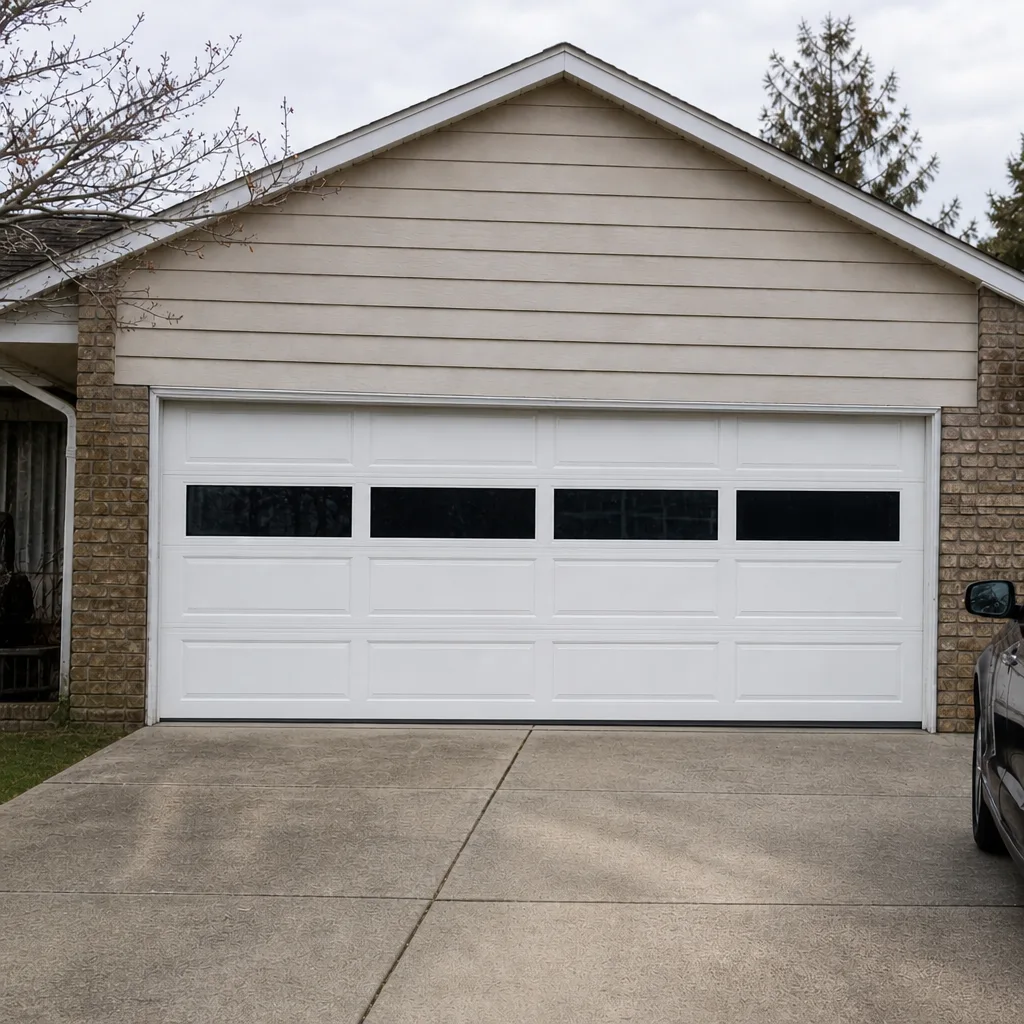 After
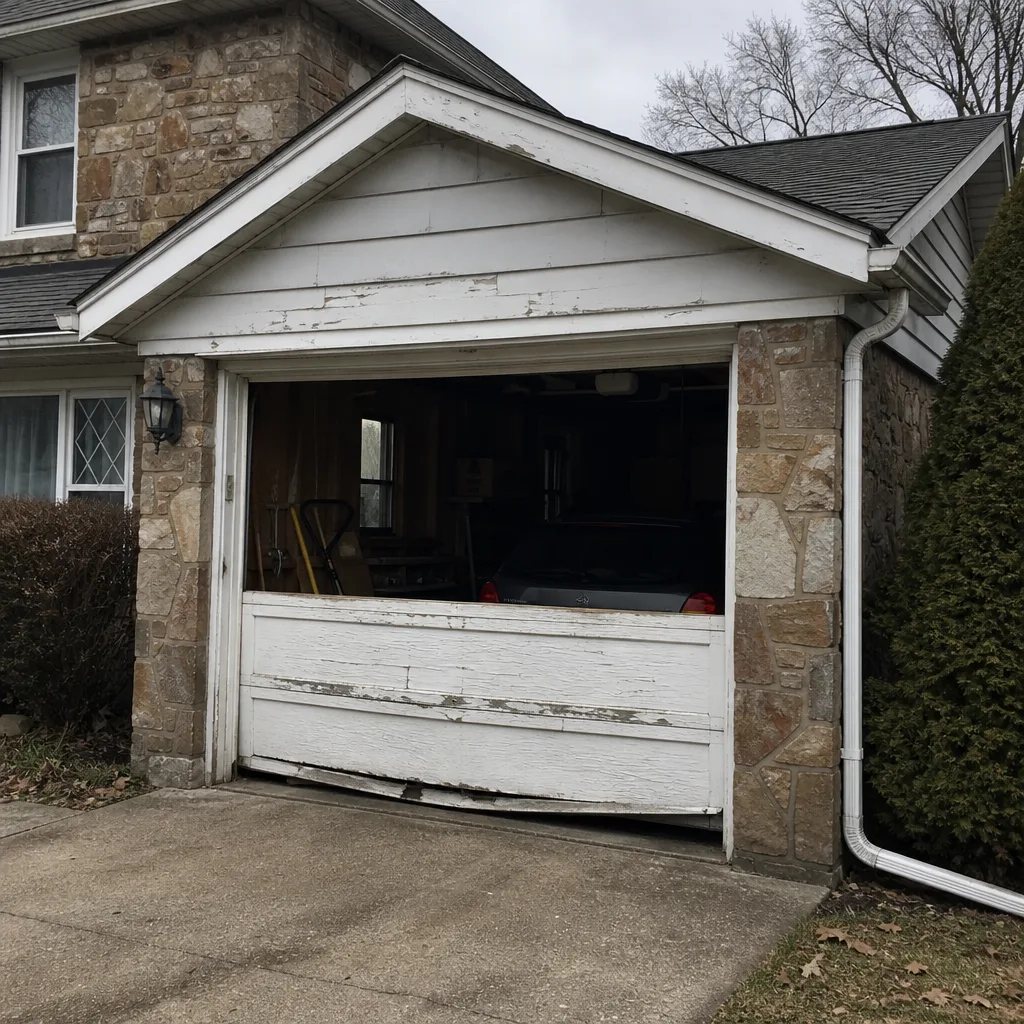 Before
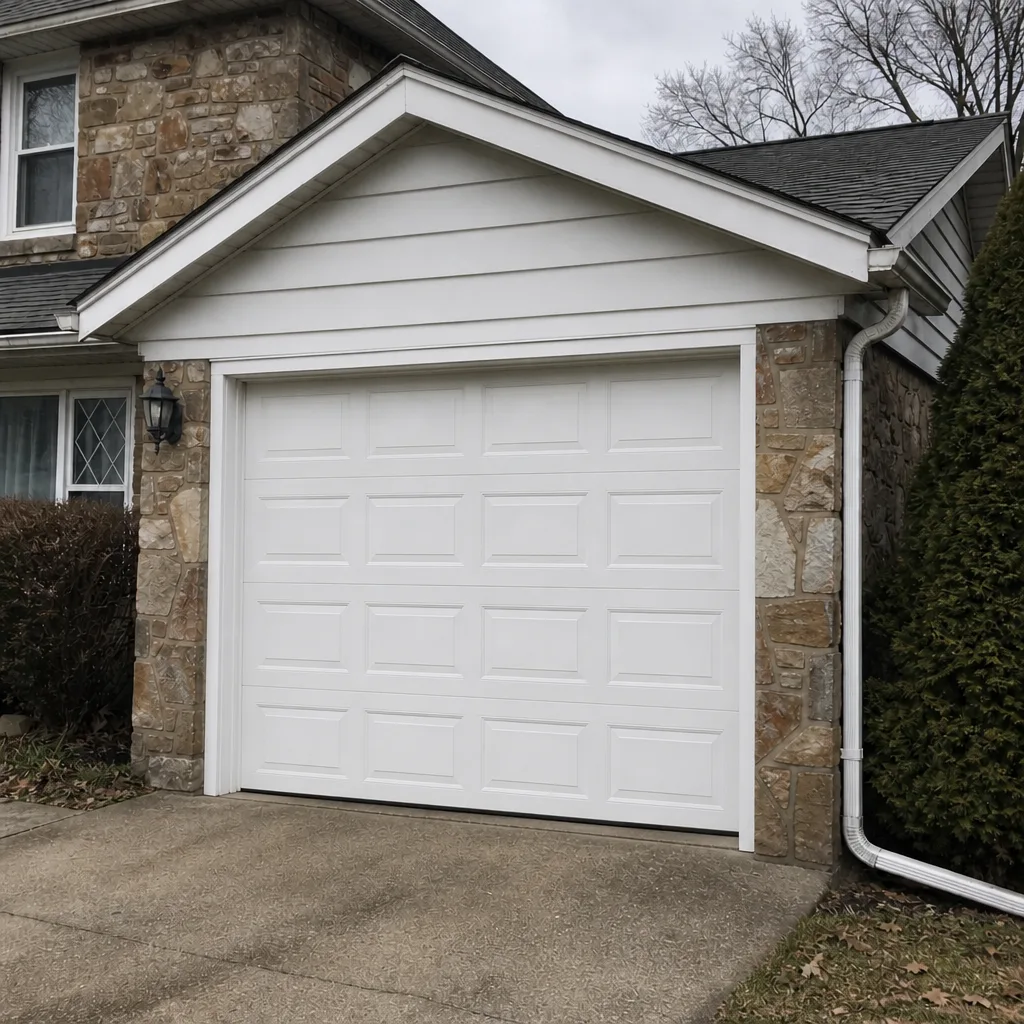 After
When to Call a Professional
Call a professional when the door won’t lift cleanly, when a spring has visibly failed, when the opener runs but the door doesn’t move, or when the door is stuck in a position that leaves the garage exposed. Don’t wait on those. A sticking door or a noisy opener that’s getting worse is worth a call before it fails completely. Any repair involving a torsion spring, a cable, or a track that’s come loose needs a trained technician, and it’s not a job to hand to a generalist. Our team handles all of it, from the routine to the urgent, on the brands already installed on Fox Chase homes. Garage Door Repair Fox Chase offers free estimates in Fox Chase – call (877) 651-7237.
Frequently Asked Questions
Most spring repairs fall in the range of $180 to $340 for a single spring, and a matched pair is roughly double that because a pair is replaced together. The written estimate you get before work starts sets the final price. Call (877) 651-7237 for an exact quote – estimates are free.
Yes – emergency service is a standing offering, and a door stuck open or blocking the car is exactly the situation we’re set up to respond to. A technician can typically diagnose and repair on the same visit if the part is standard. Call (877) 651-7237 and we’ll get someone out.
No – the price is quoted and agreed before any work starts, and the written estimate sets the final price. If we discover something during the estimate that changes the scope (like damaged framing or a non-standard part), we’ll tell you before we proceed. You won’t get an invoice bigger than the agreed quote for the work you approved.
The local professional performing the work is licensed and insured as their state requires. Our technicians have up to 11 years of experience on the equipment they service. We can work with your insurer if you need documentation for a claim.
Low-headroom is under about 14 inches of vertical clearance above the opening, and many older Fox Chase rowhome conversions fall into that range. Standard headroom is 15 inches or more, typical of newer builds. Low-headroom garages need low-clearance track, smaller-radius hardware, or a side-mounted opener instead of a standard overhead setup.
Yes – we work across the major brands, including Genie, Clopay, Amarr, and Wayne Dalton, along with LiftMaster, Chamberlain, and Craftsman openers. That means we can repair the system already installed on your garage without pushing a replacement. If a repair isn’t practical, we’ll tell you and quote a replacement instead.
The Bottom Line
Fox Chase garages aren’t built to one template, and the door that fits one block may not fit the next. The single most useful thing you can do is start with your garage’s actual measurements: headroom, opening width, and horizontal depth. From there, the right door material, hardware, and opener follow. Repairs on springs, cables, and openers are usually a single-visit job; installations need a measure and a scheduled install. Whatever your door’s age or brand, the written estimate sets the price and it’s quoted before any work begins. If you’d like a no-obligation look at your garage, call us and we’ll take it from there.
If you’re ready to get your door working again, or you just want a straight answer on what’s possible with your garage, call (877) 651-7237 for a free estimate. We’ll measure it, tell you what fits, and quote it in writing before we touch a thing.
Written by the team at Garage Door Repair Fox Chase.